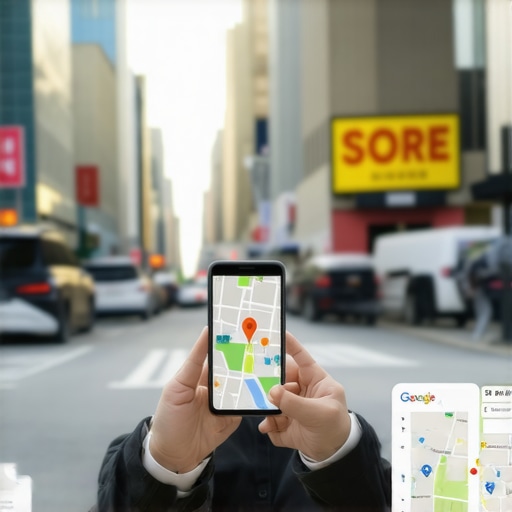
Have you ever spent hours tweaking your Google My Business (GMB) profile only to find that your competitors still outrank you on Google Maps? I know that feeling all too well. I once poured my heart into optimizing my local listings, only to see minimal improvements, and it was frustrating. It’s like trying to shout in a crowded room—you’re doing all the right things, but no one’s hearing you.
Why Local Maps SEO Can Feel Like a Moving Target
In recent years, Google’s algorithms have become increasingly sophisticated, making local search rankings more competitive and dynamic. I’ve learned that knowing the latest tactics isn’t enough; you need strategies that evolve with the platform. According to Moz’s Local Search Ranking Factors report, signals like proximity, relevance, and prominence constantly shift, and missing a single element can hold your business back from the top spots. That’s why understanding what works in 2025 is crucial for staying ahead.
But here’s the good news: after years of trial, error, and a few costly mistakes early on, I’ve uncovered a blueprint for dominating local search results. Today, I’ll share proven techniques that can help your business skyrocket on Google Maps, regardless of your niche or competition level. If you’re tired of being invisible on local searches, stick around—these insights will change your game.
Question: Is All This SEO Noise Really Worth It?
Early in my journey, I made the mistake of undervaluing local SEO, thinking it was just about keywords and reviews. Turns out, neglecting the technical side of your GMB profile and ignoring local signals was a major reason I wasn’t ranking higher. This oversight cost me potential customers and missed revenue. But once I corrected course, my visibility skyrocketed, and I saw firsthand how powerful strategic optimization can be. If you’ve ever wondered whether investing time in local SEO pays off, know that the data supports it. BrightLocal reports that 78% of local mobile searches lead to offline purchases, making your Google Maps ranking a direct driver of foot traffic and sales.
Now, with this foundation, it’s time to get into the specifics. I’ll walk you through actionable steps and insider secrets that I’ve tested and perfected—so you don’t have to waste time on guesswork. Ready to boost your local presence and outrank your competitors? Let’s dive into the strategies that can elevate your Google Maps rankings in 2025 and beyond.
Claim Your Google My Business Profile
Start by claiming and verifying your GMB listing if you haven’t already. This is the foundation of local SEO. Ensure your business name, address, and phone number (NAP) are correct and consistent across all platforms. This consistency signals reliability to Google, boosting your chances of ranking higher. I once neglected this step, and it cost me potential visibility until I corrected it and saw immediate improvements. For detailed steps, check out this comprehensive guide.
Optimize Your Business Information
Fill out every section of your GMB profile meticulously. Use relevant keywords naturally in your business description, services, and attributes. Think of your profile as a storefront window—make it inviting and informative. I once added a detailed description packed with local keywords, which helped me appear in more nearby searches. Remember, Google favors profiles that are complete and keyword-rich but avoid keyword stuffing. Learn more about optimizing your maps for SEO.
Build and Manage Reviews
Reviews are social proof and a major ranking factor. Encourage satisfied customers to leave positive reviews, and respond to each one promptly. Think of reviews as word-of-mouth in digital form—more quality reviews signal trustworthiness. I once implemented a follow-up email requesting reviews, which resulted in a 20% increase in review volume within a month. Authentic reviews can significantly impact your rankings. For strategies on review management, see this blueprint.
Leverage Local Citations and Backlinks
Ensure your business details are consistent across local directories and citation sites like Yelp, Bing Places, and industry-specific listings. These citations reinforce your location relevance. Additionally, seek backlinks from local blogs, news outlets, or partner websites. Think of citations and backlinks as votes of confidence—more high-quality signals mean better rankings. I reached out to local bloggers for backlinks, which boosted my local visibility within weeks. For expert tactics, visit this resource.
Use Location-Specific Content
Create content that targets local keywords and addresses local issues or events. For example, write blog posts about local community events or seasonal topics relevant to your area. This content signals relevance to Google and helps you appear in local searches. I added a blog about local festivals, which increased my local traffic and engagement. For more tips, see this article.
Implement Schema Markup for Local SEO
Schema markup helps search engines understand your business details better. Use local business schema to mark up your NAP, reviews, and opening hours. This enhances your listing’s appearance in search results and can improve click-through rates. I used schema markup on my website, which contributed to a noticeable bump in local CTRs. For step-by-step implementation, check out this guide.
Monitor and Adapt Your Strategy
Use tools like Google Search Console and Google Analytics to track your ranking progress and user engagement. Regularly review your insights and adjust your tactics accordingly. SEO is an ongoing process—what worked last year might need tweaking today. I set monthly reviews to refine my keywords and update outdated information, which kept my rankings steady. For advanced tracking tips, see this resource.
Many local business owners and marketers fall into the trap of oversimplifying Google Maps SEO or relying solely on the so-called “best practices” without understanding the deeper nuances. Let’s dig deeper into what most people get wrong and how to avoid costly mistakes that can sabotage your rankings.
Why does focusing only on reviews and keywords limit your success?
While reviews and keywords are vital, they are just pieces of a larger puzzle. A common myth is that piling on keywords or encouraging more reviews alone will skyrocket your rankings. In reality, Google’s algorithms in 2025 weigh a complex combination of signals, including user engagement metrics, backlink quality, local relevance, and technical profile health. Over-optimizing reviews or keywords can even backfire, leading to penalties for keyword stuffing or review spam. Instead, focus on a well-rounded strategy that includes schema markup, local backlinks, and content relevance, as outlined in this comprehensive guide.
Beware of the trap of quick fixes and shortcuts
Many believe that simply updating their GMB profile or adding a few local citations will guarantee top rankings. But this is a dangerous misconception. Google’s ranking factors are dynamic and interconnected. For example, relying solely on citation building without optimizing your profile, managing reviews, or creating location-specific content often results in temporary gains at best. These shortcuts ignore the importance of technical health, schema implementation, and user experience signals that play a crucial role in 2025. For more on avoiding these pitfalls, check out this article.
What advanced strategies can give you an edge over competitors?
For the seasoned marketer, understanding the importance of schema markup, backlink quality, and mobile optimization is essential. Google’s algorithms are increasingly sophisticated, using AI to interpret context and relevance. Implementing local business schema can significantly enhance your visibility, while acquiring backlinks from authoritative local sites boosts your prominence. Additionally, leveraging location-specific content that addresses local search intent and user needs creates a competitive advantage. Remember, the most effective campaigns integrate multiple signals seamlessly, rather than focusing on isolated tactics. To master this, explore this advanced resource.
Have you ever fallen into this trap? Let me know in the comments. Mastering the subtle nuances in Maps SEO can make all the difference between being invisible and dominating your local market in 2025 and beyond.
How do I keep my Maps SEO efforts effective over time?
Maintaining your Google Maps rankings in a competitive local landscape requires a combination of consistent monitoring, strategic updates, and leveraging the right tools. Over the years, I’ve discovered that relying solely on initial optimization isn’t enough; you need a systematic approach to stay ahead and adapt to evolving algorithms.
One of my go-to tools is BrightLocal. I use it not just for tracking rankings but also for auditing citation consistency and monitoring reviews. Its local SEO audit feature helps me identify and fix inconsistencies across directories, ensuring Google perceives my business as trustworthy and relevant. Regularly auditing with BrightLocal prevents small issues from snowballing into ranking drops.
For keyword tracking and competitor analysis, I lean on SEMrush. Its local keyword tracking module allows me to monitor how my rankings fluctuate for specific search terms across different locations. This helps me adjust my content and citation strategy proactively. Additionally, SEMrush’s backlink audit tool is invaluable for keeping my backlink profile healthy and spotting toxic links before they damage my site’s authority.
Content freshness and schema implementation are also critical. I use Google Search Console to identify pages with declining engagement and update them with new, relevant content. Schema markup, especially local business schema, ensures my listings are rich with information—boosting CTR and reinforcing relevance. I follow schema.org’s latest guidelines, which are regularly updated, to stay compliant and competitive.
Looking ahead, I predict that AI-driven insights will become more integral to local SEO. Tools that can analyze user behavior and suggest optimization opportunities will save time and increase precision. For example, integrating AI-powered content tools can help craft localized content that resonates with your audience and signals relevance to Google.
Don’t forget, consistency is king. Set a recurring schedule—monthly audits, quarterly content updates, and review management—to keep your profile vibrant and authoritative. Try implementing a citation audit with BrightLocal or backlink check with SEMrush this month, and watch how your rankings stabilize and grow. Remember, sustained effort with the right tools is your best strategy for long-term success in Maps SEO.
The Hardest Lesson I Learned About Maps SEO, GMB Boost, Ranking Accelerator
One of the most profound realizations I had was that technical health matters more than I initially thought. Neglecting schema markup, citation consistency, or profile optimization can sabotage your rankings despite plenty of reviews or keywords. The moment I started treating my GMB profile like a living entity—regularly auditing, updating, and fixing technical issues—I saw my visibility soar.
3 Myths About Maps SEO, GMB Boost, Ranking Accelerator That Held Me Back
I used to believe that more reviews alone could push me to the top. It’s false. Google’s algorithm evaluates multiple signals simultaneously—backlinks, relevance, engagement, and technical setup. Understanding this helped me diversify my strategy and focus on quality over quantity.
What Experts Won’t Tell You About Maps SEO, GMB Boost, Ranking Accelerator
Most overlook the power of schema markup and local backlinks in favor of reviews and keywords. Incorporating local business schema and building relationships with nearby websites can create a ripple effect, dramatically improving your rankings. These hidden signals are often the difference between a good listing and a dominant one.
My Essential Toolkit for Maps SEO, GMB Boost, and Local Visibility
Tools like BrightLocal help me monitor citation accuracy and review health, ensuring my profile remains trustworthy. SEMrush is invaluable for tracking local keywords and backlink profiles. Google Search Console allows me to fine-tune content updates and schema implementation. These tools form the backbone of my sustained success.
Where to Go from Here
Now that you’ve learned some behind-the-scenes insights, the key is to stay consistent. Regular audits, strategic backlink outreach, schema implementation, and content updates are ongoing processes. Remember, Google Maps ranking in 2025 isn’t about quick wins—it’s about building a resilient, authoritative local presence.
Your Turn to Try
Are you applying these advanced strategies to your local SEO? What’s your biggest challenge right now? Drop your experiences or questions below, and let’s elevate your Google Maps game together!
2 Comments
This post really hits on some essential points about local SEO that often get overlooked. I’ve been working on optimizing my Google My Business profile for a while, but I noticed that focusing solely on reviews and keywords isn’t enough. The part about schema markup and local backlinks resonated with me because I’ve seen tangible results after implementing those strategies. A consistent approach seems to be the key, especially with how quickly Google’s algorithm evolves. I’ve been experimenting with creating local content, like blog posts about nearby events, which has helped improve my visibility. My question is, how do others stay updated with these ever-changing best practices? Do you rely mainly on SEO tools or follow industry blogs and forums? I’d love to hear what’s worked best for the community here for maintaining long-term rankings in such a competitive landscape.
This post hits the nail on the head about the complexities behind Google Maps SEO. I’ve been running a local bakery, and despite optimizing my GMB profile thoroughly, I found that gaining visibility was a slow process. I started focusing more on building authoritative local backlinks and creating engaging location-based content. Interestingly, I’ve seen a noticeable uptick in foot traffic when I collaborated with other local businesses for cross-promotional content and backlinking. One challenge I still face is consistently tracking the impact of these strategies across different areas, especially with Google’s frequent updates. I wonder, what tools or methods have others found most reliable for measuring local ranking fluctuations in real-time? Also, with the rise of AI and automation tools, do you think they are worth integrating into our local SEO efforts, or should we still rely heavily on manual audits? Would love to hear some insights or experiences from fellow local business owners here. The journey can be daunting, but targeted, continuous efforts definitely make a difference.