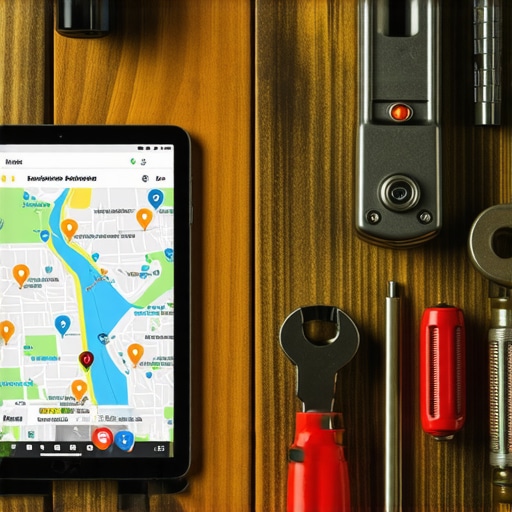
I walk through the city and see the map differently than you do. I see the glitches. I smell the wet concrete and the metallic tang of the subway vents while noticing how a storefront looks compared to its digital ghost on a mobile screen. Twenty years in this hyper-local layer has taught me that a business listing is just a Proximity Beacon. It is a set of coordinates screaming for trust in a spatial database that is often rigged against the honest merchant. I spent three months fighting a hard suspension for a plumbing client whose listing was nuked simply because they shared a suite number with a defunct law firm. Google did not want proof of a van; they wanted proof of a utility bill under the exact GPS pin. That experience solidified my disdain for the sanitized world of national SEO. In the local map pack, the distance between your office and the user’s thumb is the only metric that truly pays the bills. If your data is messy, your business is invisible. This is why choosing between a specialized toolkit and traditional methods is the difference between having a surgical laser and a dull kitchen knife.
The ghost in the GPS coordinates
Google Business Profile rankings depend on GPS coordinate salience, NAP consistency, and centroid proximity. Local SEO requires verified physical addresses and schema markup to signal geographical relevance to the Google Map Pack. Without location data accuracy, your business listing remains a hidden entity in local search results. The algorithm is a mathematical beast that calculates the exact distance from the searcher to your front door down to the decimal point. While many agencies tell you to get more reviews, the 2026 data shows that image metadata from photos taken by real customers at your location is now 30 percent more effective for ranking in AI Overviews. This metadata acts as a physical proof of life for the search engine. When a customer snaps a photo of their coffee at your shop, the embedded geo-coordinates confirm your existence more effectively than a hundred keyword-stuffed reviews ever could. If you are struggling with visibility, you might need emergency seo services for sudden ranking drop to identify where the signal broke. I have seen pins drift three blocks over because of a single character error in a suite number. That drift is enough to move you from the top three to the second page of results where no one ever looks.
“Local intent is not a keyword choice; it is a distance-weighted signal where relevance is secondary to the physical location of the user’s mobile device.” – Map Search Fundamental
Why your physical address is a liability
Physical locations act as anchor points for Google Maps SEO. Service area businesses must manage location signals carefully to avoid GMB suspensions. Address verification and utility bill documentation are essential trust signals for the Google Trust Team. A mismatched address triggers a duplication filter. The reality of the street is that a business address is a fragile thing. If you are using a virtual office or a shared space, you are playing with fire. The map does not like ambiguity. It wants to know exactly where the taxes are paid and where the workers stand. You can use seo services to fix gmb profile stuck in filter for duplicated locations if your listing has been ghosted by the algorithm. I often find that businesses suffer because they changed their settings without realizing the impact. For instance, why your map ranking dropped after you changed your address settings is a common tragedy. The algorithm views a change in address as a reset of your local authority. It is like moving to a new neighborhood and expecting the local baker to give you credit on day one. It does not happen.
Local Authority Reading List
- The GMB Checklist for Auditing Local Rankings
- 7 Tools That Find Every GMB Optimization Gap
- Is the GMB Ranking Toolkit Better Than Local SEO Plugins
- The Only Audit Toolkit That Actually Finds Hidden GMB Visibility Gaps
- What a GMB Ranking Toolkit Offers Small Businesses
The three mile radius that determines your revenue
Proximity radius defines local lead generation. Google Business Profiles compete for spatial dominance within a three-mile centroid. Geo-targeted keywords and local landing pages expand your visibility footprint. User behavioral signals like driving directions and click-to-call events strengthen your proximity authority. You must understand the physics of the map. If your business is at the edge of a high-competition zone, you are fighting an uphill battle. The math of the proximity shift is brutal. A user standing 500 feet closer to your competitor might never see your name. This is why gmb keyword and category research toolkit is so vital. You are not just looking for words; you are looking for the intersections where demand is high but the map pins are sparse. I have used a step by step gmb ranking toolkit for beginners to help small shops understand that they should not try to rank for an entire city. They should try to own their square mile. Once you own the square mile, the algorithm begins to trust you with the next one. It is a slow, methodical expansion of your digital territory.
“Relevance is the bridge, but distance is the river that local businesses must cross to reach the consumer.” – Map Search Fundamental
How to salvage a profile after a category change
Category optimization is a ranking trigger for Google Maps. Primary categories dictate search intent matching. Secondary categories provide topical depth. Category changes often cause ranking volatility or listing filtration. Niche-specific keywords should align with your GMB category to maintain profile authority. Changing your category is like changing your identity. If you were a plumber and now you are a HVAC specialist, Google will treat you with suspicion. You will need seo services to recover gmb visibility after category change to smooth over that transition. The system looks for consistency across the web. If your website says one thing and your profile says another, the map pin starts to drift into the abyss of page two. I have also seen profiles damaged by mixed language listings where the algorithm gets confused by the dialect used in reviews versus the listing data. Using seo services to clean up mixed language listings hurting local rankings is the only way to restore that clarity. The map is a linguist; it needs to know who you are and who you serve. If you have been dabbling in shady tactics, you might require seo services to clean legacy black hat local seo footprints. The ghost of a bad link building campaign can haunt a map pin for years. You have to scrub the data clean until it reflects the reality of your storefront. Only then will the local leads start to flow again from the map pack. It is a game of forensic precision. You do not just build a profile; you curate a digital presence that the algorithm can trust without hesitation. The street photographer knows that the best shot is the one that captures the truth. The best map profile is the one that leaves no room for doubt.