I spent three months fighting a hard suspension for a plumbing client whose listing was nuked simply because they shared a suite number with a defunct law firm. Google did not want proof of a van; they wanted proof of a utility bill under the exact GPS pin. I stood on that sidewalk. It smelled like wet concrete after a summer storm. I looked at the building. It was a glitch in the system. The physical reality did not match the digital footprint. This is the world of local search. It is forensic. It is cold. You see a map pin; I see a proximity beacon. I see the invisible lines of coordinate salience that dictate whether a business eats or starves.
The microscopic math of proximity signals
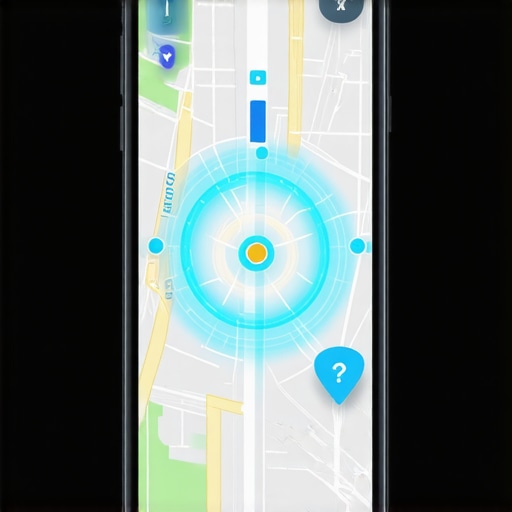
Google determines your map radius by calculating user location, business prominence, and categorical relevance through GPS data points and Wi-Fi triangulation. These signals create a dynamic boundary. It is not a perfect circle. It is a jagged polygon shaped by traffic patterns, searcher behavior, and the density of local competitors in your niche. If you are using the best software to rank in google maps 3 pack, you know that proximity is the most stubborn factor. It is the math of the blue dot. Google knows where your customers are when they search. It knows if they are walking or driving. It knows if they are searching from a high-speed Wi-Fi network at an office or a weak cellular signal in a basement. Each of these variables shifts the radius.
“Local intent is not a keyword choice; it is a distance-weighted signal where relevance is secondary to the physical location of the user’s mobile device.” – Map Search Fundamental
The ghost in the GPS coordinates
Coordinate salience refers to the mathematical weight Google assigns to the precise latitude and longitude of a business compared to the searcher. I have seen businesses disappear because their pin was ten feet too far from the street. This is why how to stabilize your map pin when the local algorithm shifts becomes a survival skill. The system looks for a forensic trace. It checks if the phone’s accelerometer data matches a visit. If you use seo services to fix keyword stuffing and content issues, you are cleaning the surface. But beneath that, the GPS signal must be pure. When a business name is edited, the trust score resets. You can see the result in reclaiming your spot fixing rankings after a business name edit. The algorithm is suspicious of change. It values the historical anchor of a physical location that does not move.
Why your physical address is a liability
Your physical address acts as a fixed anchor that limits your reach based on the density of competing businesses. If you are in a crowded city, your radius might be two blocks. In a rural area, it could be twenty miles. This is the proximity filter. Many agencies offer emergency seo services for sudden ranking drop, but they fail to look at the address. If a competitor moves closer to the centroid of the city, your radius shrinks. You can learn [how to break the proximity filter without changing your business address](https://mapsrankingaccelerator.com/how-to-break-the-proximity-filter-without-changing-your-business-address) by focusing on behavioral signals. The system watches for check-ins. It watches for photo uploads with GPS metadata. A photo taken by a customer at your shop is worth more than a thousand words of content. It proves the physical visit happened. It proves the business exists. This is why the one photo update that finally triggered more phone calls works so well.
Local Authority Reading List
- The Keyword Tool for Agencies
- The Local Backlink Error
- Why Your Map Tracker Is Lying
- The Citation Cleanup Move
- How to Break the Proximity Filter
The forensic trace of customer travel patterns
Google tracks the historical movement of mobile devices to verify that a business location is a genuine destination. If no one ever visits your office, Google knows. It sees the lack of transit data. This is a common issue for businesses using virtual offices. I have worked on gmb spam fighting and review cleanup services for years. The biggest red flag is a business with hundreds of reviews but zero location history from the reviewers. The algorithm cross-references the “Blue Dot” history. If you are struggling, you might need a local seo toolkit for multi location businesses that accounts for these behavioral gaps. It is about proving the flow of traffic. The radius expands when Google sees people traveling from further away to reach you. This increases your prominence score. Prominence is the only thing that can override the proximity filter.
Why Google ignores your keyword stuffing
Keyword stuffing in business names triggers spam filters and manual reviews because it violates the core principle of representing a real-world entity. I hate keyword-stuffed names. They are a glitch in the ecosystem. I often provide seo services to fix over aggressive location page strategy penalties. People think adding “Plumber Chicago” to their name helps. It might for a week. Then the hammer falls. You need services to monitor and prevent future gmb suspensions. The radius is determined by categories, not just names. Hidden categories can change everything. If you are a med spa, you might be missing out on [hidden gmb categories that could double your local impressions](https://mapsrankingaccelerator.com/hidden-gmb-categories-that-could-double-your-local-impressions). The algorithm looks for the best fit for the user intent. It does not look for the longest business name. It looks for the most trusted pin.
The math behind the three mile radius
The typical three-mile radius is a baseline that fluctuates based on the density of the Local Business Schema and competitor proximity. If you have the local schema markup errors that are tanking your search visibility, Google cannot trust your location. It shortens your reach. You need to ensure your JSON-LD matches your NAP data exactly. Any mismatch is a red flag. I remember a case where [why our google business profile disappeared and the schema fix that brought it back](https://mapsrankingaccelerator.com/why-our-google-business-profile-disappeared-and-the-schema-fix-that-brought-it-back) was the only solution. The radius is a calculation of trust. If your website is infected or slow, your map ranking drops. You can see this in [why your website infection is tanking your local search visibility](https://mapsrankingaccelerator.com/why-your-website-infection-is-tanking-your-local-search-visibility). The system connects the dots between your site, your citations, and your physical coordinates. If any link is broken, the radius shrinks.
“The proximity of the business to the searcher is the single most influential factor in the local algorithm, often outweighing organic authority and review volume.” – Local Search Intelligence Report
The unseen signals of local justification
Justifications are the small snippets of text in the Map Pack that prove a business can satisfy a specific search query. These are pulled from reviews, website content, and even photo captions. They are the ultimate tools to fix low gmb rankings. If your profile shows “Sold here” or “Provides service”, your radius for that specific query expands. This is why you need a [stop guessing the local map pack toolkit for faster lead growth](https://mapsrankingaccelerator.com/stop-guessing-the-local-map-pack-toolkit-for-faster-lead-growth). You need to feed the machine the right data. Stop building generic pages. Focus on [stop building generic city pages the 3 local edits that win the map pack](https://mapsrankingaccelerator.com/stop-building-generic-city-pages-the-3-local-edits-that-win-the-map-pack). The goal is to become the most relevant answer within the largest possible distance. The pin must be stable. The data must be forensic. The results will follow. The wet concrete is dry now. The glitch is fixed. The business is visible. That is the only thing that matters in the local layer.