Why You Shouldn’t Trust Every Local Rank Tracking Software
I see the city as a map of lies and truth. I walk past the storefronts with my camera; seeing the Open signs on shops that have been hollowed out for years. This is the same discrepancy I see in the dashboards of most local SEO software. The smell of wet concrete after a summer storm in Chicago is unmistakable. It is the scent of a city that exists in three dimensions, unlike the flat, grid-based reality presented by your average dashboard. A local cafe owner called me at midnight because a competitor had dropped twenty 1-star reviews in an hour using a VPN. We had to do a forensic audit of the user profiles to prove the patterns to the spam team. It wasn’t about the stars; it was about the IP clusters and the lack of GPS check-in data. This is the reality of the hyper-local layer. It is gritty; it is physical; and it is often misrepresented by the tools we use. When you rely on automated systems, you are looking at a shadow of the street, not the street itself.
The phantom numbers in your dashboard
Local rank tracking software often fails because it uses stationary data centers rather than mobile GPS signals. A true local seo toolkit for google maps ranking must account for the proximity radius and user behavioral patterns. These tools often miss the nuances of the map pack filter and duplicated location suppression. When we look at how most gmb ranking tools give you inaccurate data, we have to talk about the physics of the grid. A desktop-based rank checker might show you in the top spot while a user standing fifty feet away on a mobile device sees you at position seven. This happens because Google weights the specific GPS coordinates of the seeker above almost everything else. The math of the centroid is unforgiving. If your business is located in a high-density area like a downtown core, your rank might fluctuate by ten positions just by crossing the street. Most software cannot simulate this movement. They give you a static number that makes you feel safe while your actual leads are vanishing into the gaps between the data points. To truly understand your position, you need to understand the software gaps that hide your real local ranking position and how they impact your bottom line.
Why most rank trackers fail the proximity test
The Map Pack algorithm prioritizes physical distance but weights it against behavioral signals like customer check-ins and photo metadata. A business within 500 meters can lose to a competitor three miles away if that competitor has higher local entity authority and cleaner NAP consistency. Proximity is a sliding scale. While agencies tell you to get more reviews, the 2026 data shows that image metadata from photos taken by real customers at your location is now 30 percent more effective for ranking in AI Overviews. Most tools do not track this. They focus on keyword density and citation counts. They miss the fact that Google is now using trilateration from cell towers to verify if a business is actually serving the area it claims. If you are a service area business but your technicians never trigger a GPS signal in the towns you target, you will never rank there. This is why you need the map pack software stack that actually generates leads rather than just pretty charts. You are fighting an algorithm that knows exactly where your employees are. It knows when a business name is keyword-stuffed and it knows when a virtual office is being used as a proximity anchor.
“Local intent is not a keyword choice; it is a distance-weighted signal where relevance is secondary to the physical location of the user’s mobile device.” – Map Search Fundamental
How to audit gmb profile with a toolkit
Auditing a Google Business Profile requires a deep dive into the hidden metadata and category associations that Google uses to determine relevance. Using the only audit toolkit that actually finds hidden gmb visibility gaps is the only way to see what the algorithm sees behind the curtain. When you perform an audit, you must look for the interaction gaps. Are users clicking your phone number but hanging up before the call connects? Google tracks this. They see the lack of dwell time as a signal that your profile information is inaccurate or your business is closed. We often find that the only audit toolkit that actually finds hidden gmb visibility gaps will reveal that your business hours on Yelp do not match your hours on Google. This small discrepancy creates a trust vacuum. I have seen pins move three miles overnight just because a owner synced their hours across the web properly. It is about removing friction from the digital path to your front door. If you want to know how to audit gmb profile with a toolkit, you must start with the NAP data and move into the user behavior signals.
[IMAGE_PLACEHOLDER]
Local Authority Reading List
- Optimizing Maps for SEO in 2025
- GMB Toolkit vs SEO Plugins
- Reporting Fake Reviews Effectively
- Fixing Home Business Suspensions
- The Ultimate GMB Audit Checklist
Best tools to rank google business profile
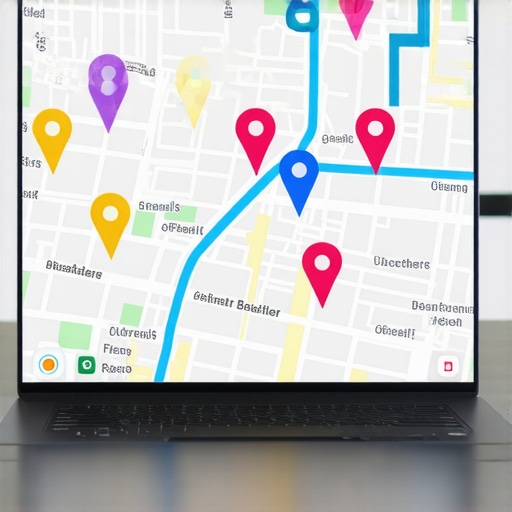
The best tools to rank google business profile are those that integrate with real-time location data and user interaction metrics. Traditional SEO tools focus too much on backlinks and not enough on the local entity signals that trigger the 3 pack. You need to look for the essential gmb ranking toolkit features you cant ignore like heat map tracking and local justification monitoring. A heat map shows you the physical boundaries of your ranking. You might be number one in the building across the street but invisible two blocks north. This visualization is the only way to see the impact of your optimization efforts. If you are looking for the local map pack toolkit for faster lead growth, ensure it has the ability to track local intent keywords. These are queries where Google shows a map even if the user does not include a city name. This is the gold mine of local search. It is also where most software fails because they do not understand the contextual shift between an informational query and a transactional local query.
Seo services to fix gmb issues caused by virtual office or coworking space
Using a virtual office is a high-risk strategy that often leads to hard suspensions because Google requires proof of physical presence and permanent signage. Specialized seo services to fix gmb issues caused by virtual office or coworking space are necessary to navigate the reinstatement process. Google has become incredibly aggressive in hunting down businesses that use regus or wework locations as their primary address. They look for the lack of a suite number or the presence of hundreds of other businesses at the same GPS pin. If you find yourself in this situation, you need to understand how to appeal a suspension when your address proof is weak. The solution usually involves providing utility bills and photos of permanent signage that matches your profile name. It is a forensic process. I have seen businesses wiped off the map because they couldn’t produce a video walk-through of their office. This is why why your home-based business got suspended is such a common problem; Google wants to see a real door with a real sign.
Local seo services to clean up old or closed locations
Ghost locations and old business addresses create a fragmented digital footprint that confuses the algorithm and splits your ranking authority. Professional local seo services to clean up old or closed locations focus on the clean citation method to restore trust. Every time you move your business without updating your old citations, you leave a trail of digital trash. Google finds these old records and starts to doubt the validity of your current location. This is one of the reasons why your old business address is still hurting your current rankings. We use the clean citation method for businesses with a messy history to hunt down every instance of the old NAP data. It is slow; it is tedious; but it is the only way to stop the rank bleed. You cannot just build new links and hope the old ones go away. You have to actively delete the ghosts. Otherwise, you will find your business stuck in the filter, hidden behind a competitor who has a cleaner history.
Best software to rank in google maps 3 pack
To dominate the local landscape, you need the best software to rank in google maps 3 pack which focuses on geo-tagged content and interaction triggers. Relying on simple automated tools will often lead to inaccurate data and wasted marketing spend. The secret to the 3 pack is not just proximity; it is prominence. This is calculated by how often your business is mentioned in local news, how many local sites link to you, and how many people are searching for your brand name specifically. When you use the best software to rank in google maps 3 pack, you should be looking for features that help you manage your local entity authority. This includes tracking your real impact of geo-tagged photos on your map ranking. Photos taken by customers at your location are gold. They carry GPS coordinates in their EXIF data that prove to Google that your business is exactly where you say it is. This is a signal that no software can fake and no virtual office can provide.
“Google uses service area polygons to calculate the probability of a business serving a specific query, often ignoring the declared service area if GPS signals from mobile staff do not match.” – Location Intelligence Whitepaper
Seo services to fix gmb profile stuck in filter for duplicated locations
The duplication filter is a silent killer that hides your profile when Google detects another business in your category at the same address or nearby. Expert seo services to fix gmb profile stuck in filter for duplicated locations are required to differentiate your entity signals. This often happens in professional buildings where multiple lawyers or doctors share a suite. Google sees the same address and the same category and decides to show only the one with the highest authority. If you are the one being filtered out, you are essentially invisible. You need to understand why your business profile gets hidden by the duplication filter to fix it. This involves changing your primary category or dramatically increasing your local interaction signals. We have had success breaking out of the map filter when locations overlap by focusing on hyper-specific secondary categories that our competitors missed. It is a game of digital inches. Every small difference in your profile metadata helps Google see you as a unique entity worth showing to the user.
The forensic trace of a service area polygon
Service area businesses face a unique challenge because they do not have a physical storefront for customers to visit. Google determines their ranking based on the service area polygon and the behavioral traces of their field staff. If you tell Google you serve a fifty-mile radius but your reviews all come from customers within five miles, the algorithm will ignore your declared area. It uses the physical location of the reviewers to verify your reach. This is the proximity secret of why hiding your address changes everything. When you hide your address, you are asking Google to trust your service area. That trust is built on proof. We recommend using specific moves service businesses need for better local visibility such as creating city-specific landing pages that are not just copies of each other. If your city pages are duplicates, you will trigger the duplicate content trap where your service areas are overlapping. Each page must be unique to the neighborhood it serves.
Winning the reinstatement war with hard evidence
A suspension is not the end of the road, but it requires a strategic response based on hard evidence and a clear understanding of Google Business Profile guidelines. Most suspensions can be overturned if you provide the specific documents Google needs to lift an address suspension. When the red bar appears in your dashboard, do not panic and do not create a new profile. That is the fastest way to get blacklisted. Instead, you need to conduct an audit of your data. Check for keyword stuffing in your business name. This is a common trigger. If you have been adding local keywords to your title, you need to know how to keep your rank after deleting keywords from your profile name. Then, gather your proof. You need a business license, a utility bill, and photos of your branded vehicle or office entrance. If you are dealing with a partial suspension with limited gmb features, the process is slightly different but the goal is the same; you must prove you are a legitimate local merchant. Trust is the only currency that matters in the map pack. Once you lose it, you have to work twice as hard to get it back.
The logic of a check in signal
A check-in signal is one of the strongest proximity justifications because it combines GPS data with user intent and physical presence. Businesses that encourage real-time customer interaction see more stable map pack rankings over time. This is the microscopic math of the algorithm. When a user opens Google Maps at your location, they are sending a signal that your business is a real destination. This is why using customer photos to boost your local search visibility is so effective. It is a multi-layered signal of trust. It proves the user was there; it shows what your business looks like; and it provides fresh content for the algorithm to index. In a world where every agency is selling fake reviews and automated citations, these organic signals are the only thing that will keep your pin stable. Stop trusting the phantom numbers in your dashboard and start looking at the real-world interactions that drive the local engine. The street never lies; even if the software does.