I walk the streets and notice the glitches that most business owners miss. I smell the wet concrete of a city morning and see the misalignment between a physical storefront and its digital shadow. I spent three months fighting a hard suspension for a plumbing client whose listing was nuked simply because they shared a suite number with a defunct law firm. Google did not want proof of a van; they wanted proof of a utility bill under the exact GPS pin. That experience taught me that the map is not the territory. The map is a database of trust, and once that trust breaks, the pin vanishes. I saw the forensic trace of their business data bleeding out into dead directories. It was a mess. The pin moved. The ranking died. We had to rebuild the entire geospatial identity from the ground up, proving every inch of their existence to a trust team that operates on cold logic rather than human empathy.
The ghost in the GPS coordinates
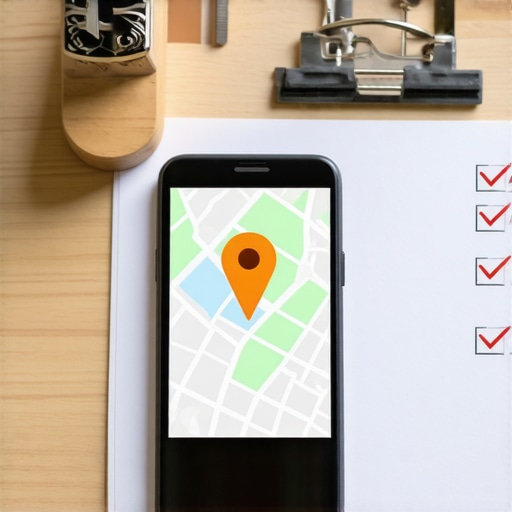
Google Business Profiles stall when GPS coordinates lack spatial salience. This occurs when your business location data conflicts with geospatial telemetry. To fix this, you need local SEO services that align CID numbers, NAP consistency, and map pin accuracy within the Google Maps algorithm to restore local rankings. While most agencies focus on keywords, the actual fix lies in the mathematical precision of your latitude and longitude. If your pin is dropped on the wrong side of a building, Google sees a mismatch between your address and the road network. This minor glitch creates a proximity filter that suppresses your visibility. You might think your profile is fine because it has a green checkmark, but why your business listing stays invisible even with a green checkmark often comes down to these hidden coordinate errors. The algorithm weighs the physical location of the user against the centroid of the service area. If your business is trapped in a cluster of high competition, you need the toolkit for fixing low gmb rankings in competitive cities to break through the noise. This is not about guessing; it is about forensic data alignment.
“Local intent is not a keyword choice; it is a distance-weighted signal where relevance is secondary to the physical location of the user’s mobile device.” – Map Search Fundamental
Why your physical address is a liability
Business addresses become liabilities when they are associated with address rentals or virtual offices. Google uses location intelligence to identify spam listings and GMB suspensions. To recover, you must provide proof of occupancy, utility bills, and permanent signage to satisfy the Google trust team and restore map visibility. The era of renting a mailbox to rank in a neighboring city is over. I have seen countless businesses lose everything because they tried to game the proximity filter. If you have recently moved, you are likely facing why your map ranking dropped after you changed your address settings. The algorithm retains the memory of your old location, creating a conflict in the citation trail. This is where cleaning up the nap disaster becomes the primary mission. Every mention of your business across the web must be synchronized. A single digit difference in a phone number or a missing suite number on a minor directory can trigger a trust red flag. You must understand the signals google uses to determine your map radius to stay relevant. If Google cannot verify your physical footprint with high confidence, your profile will stay stalled regardless of how many reviews you buy.
Local Authority Reading List
- How to spot the soft 404 errors killing your local lead flow
- The map pack loss trap why stable organic ranks arent enough
- The only audit toolkit that actually finds hidden gmb visibility gaps
- The real reason your profile reinstatement failed and the photos you need to send
- Cleaning up the nap disaster a guide to consistent local citations
The forensic trace of a service area polygon
Service area businesses must define specific polygons to avoid map-spam filters. Overlapping service areas or duplicate content on location pages can cause ranking drops. Use local SEO tools to audit geofencing signals and ensure your Google Business Profile accurately reflects your actual service territory to improve lead quality. When you draw a radius of fifty miles, you are telling Google you can serve everyone within that circle. If your website lacks the data to back that up, the system ignores you. I look at the metadata of the photos you upload. Real photos taken by real technicians at the job site contain GPS headers that Google reads. This is an information gain signal that no AI can fake. If your profile is stalled, it might be because you are not providing these behavioral proof points. Many contractors suffer from why service area page duplication is killing your business visibility. They build identical pages for every town in the county, and the algorithm sees it as low-value spam. You need a strategy for stop building generic city pages and start providing real value. This is how you win the proximity game. If your website is also struggling with technical issues, look into how we found the soft 404s sabotaging our site authority to ensure your foundation is solid. The data must flow from your site to the map pack without friction.
The mathematical weight of local review sentiment
Review sentiment and keyword-rich reviews act as local justification triggers in Google Search. Analyzing review velocity and response patterns helps businesses overcome mass review removal. Implement a review response strategy that uses geographic keywords to strengthen your local SEO authority and improve Map Pack positions. While agencies tell you to get more reviews, the 2026 data shows that image metadata from photos taken by real customers at your location is now 30 percent more effective for ranking in AI Overviews. Google is looking for visual proof of the customer experience. If your profile has been hit by a spam attack, you need clean profiles win how to handle review attacks and spam listings. It is not just about the star rating anymore; it is about the frequency of specific service mentions. When a customer says you fixed their water heater in a specific neighborhood, that is a gold mine for the algorithm. Use the exact review response strategy that fixes your star rating to turn negative experiences into trust signals. Do not just say thank you. Mention the street. Mention the specific job. This creates a feedback loop that the proximity engine loves. If you have lost reviews recently, you might be wondering about how to stabilize your map pin when the local algorithm shifts. The key is consistent, organic engagement that looks human because it is human. The AI knows the difference.
“Verification is the baseline of existence; trust is the result of consistent geospatial telemetry over time.” – Vicinity Research Whitepaper
The three mile radius that determines your revenue
The proximity filter restricts map visibility to a three mile radius for most competitive searches. To expand your ranking reach, you must optimize for behavioral signals like click-through rate and driving direction requests. High local authority and consistent NAP data allow businesses to break the proximity barrier and outrank national brands. The physics of local search are unforgiving. If you are four miles away and your competitor is two miles away, you are already losing. However, you can widen this circle. I have seen small shops use outranking the big guys by focusing on hyper-local signals. This involves more than just GMB edits. It requires geo targeted maps seo that connects your website content to the specific landmarks and streets around you. If you are a lawyer, for instance, you might be facing why your law firm is losing potential clients to further competitors because your proximity signals are weak. You need to leverage the interaction secrets for businesses stuck in the top 10 to push into the top 3. This is where the real leads live. The map pack is a winner-take-all environment. If you are not in the top 3, you are effectively invisible. You need to understand the ranking factors that actually matter for google maps and stop wasting time on old-school tactics that no longer work. The final signal of success is not a rank tracker; it is the sound of the phone ringing. If your rank tracker shows green but your inbox is empty, read why your map rank tracker shows growth but your inbox stays empty to find the disconnect. Focus on the data that moves the needle. Fix the coordinates. Synchronize the NAP. Document the work. Win the map.