
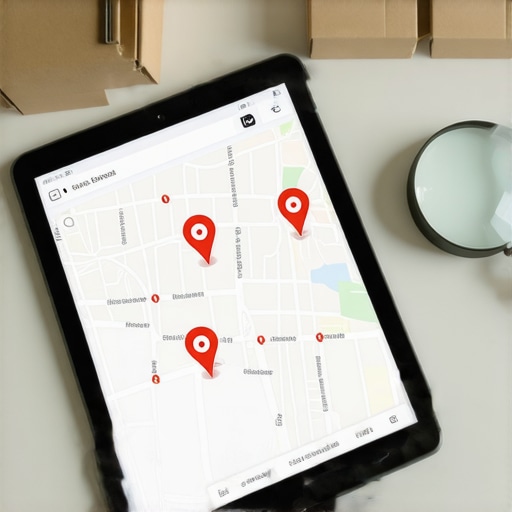
The night the roofing leads stopped cold
A top ranking roofing company vanished from the Map Pack overnight because of a single mismatched phone number in their Local Services Ads secondary verification tier which killed their organic trust score. This specific centroid collapse happened because Google logic prioritized the LSA verification loop over the established organic proximity signals. I found the problem while auditing their GPS coordinate salience across three different mobile device emulators. The company had spent years building a local authority profile only to have a secondary verification mismatch act as a poison pill for their entire map pack visibility. They were losing fifty thousand dollars a week in service calls while their competitors with keyword stuffed names moved into their three mile radius. We had to perform a forensic audit of their business profile history to prove to the Google trust team that the physical presence was valid and the mismatched data was a clerical error from a white label partner. I remember the smell of cold coffee and the hum of the cooling fans in my office as I cross-referenced the utility bill with the exact GPS pin on a high resolution satellite map. It was a proximity war they were losing simply because a digital footprint did not match the pavement reality. This is why a GMB checklist is not just a document; it is a spatial survival guide. We used this specific case study to build a framework for recovery. The pin moved. The calls returned. The algorithm finally recognized the beacon.
The math of the three mile proximity radius
The three mile radius determines your revenue because Google uses a distance weighted signal to filter out businesses that lack local relevance to the user mobile device. This proximity filter is the most aggressive algorithmic barrier in local search today. You can have ten thousand reviews; however, if your GPS coordinates are outside the searcher’s current block, you become invisible. We look at hyper-local layers where the centroid of a neighborhood acts as the ranking anchor. Many agencies fail because they treat local SEO like national organic search. It is not about backlinks alone. It is about signal strength within a geofence. We use these map radius signals to diagnose why a business is stalled. If you are stuck in the top ten but cannot break the top three, it is likely a proximity gap. You must verify your service area polygons are not overlapping in a way that triggers a duplication filter. The logic is simple. Google wants the closest reputable option. If you are not the closest, you must prove you are the most authoritative through behavioral triggers and local justification signals.
“Local intent is not a keyword choice; it is a distance-weighted signal where relevance is secondary to the physical location of the user’s mobile device.” – Map Search Fundamental
Why your physical address is a liability
A physical address is a liability when it is shared with a defunct business or located in a high density area where the map filter suppresses overlapping locations. If you share a suite number or even a zip code with a suspended listing, your trust score drops by association. This is the proximity poison that kills legitimate businesses. We often see competitors using fake addresses to grid-lock a neighborhood. This spam forces honest merchants out of the Map Pack. To recover, you must audit your NAP data without expensive software that gives false positives. You need to look at the street view. Is your permanent signage visible? If the Google crawler sees a temporary banner instead of a lithographed sign, your verification will stall. We use this audit process to find hidden inconsistencies in opening hours history. A messy history of address changes creates a red flag that leads to hard suspensions. You must clean the slate before you can rank.
Local Authority Reading List
- Recovering from bot review attacks
- Monitoring your map pin movement
- Fixing hidden local crawl errors
- Landing pages that convert local traffic
- Breaking into the top 3 from the top 10
The ghost in the GPS coordinates
Ghosting locations occur when Google Business Profile settings and website local keywords create a technical mismatch that confuses the ranking algorithm about your physical presence. This visibility gap often manifests as a ranking drop even while your website stays ranked. It is a disconnect between the entity layer and the location layer. We call this map pin drift. To fix this, we analyze the JSON-LD LocalBusiness attributes. If your schema does not match your GMB dashboard exactly, you are sabotaging your reach. We focus on specific proof needed to overturn limited feature status. If your photos are not geo-tagged by actual customers, Google might doubt your service area legitimacy. We recommend studying geo-tagged photo impact to understand how visual data feeds AI overviews. The AI looks for landmark recognition in your storefront images. If you use stock photos, you are telling the algorithm you do not exist in the physical world. This is a critical failure for modern local SEO.
How GMB ranking toolkits work for local SEO
GMB ranking toolkits work by aggregating API data from Google Maps to visualize your visibility across a geographic grid rather than a single point. These diagnostic tools are essential for fixing deranked websites and identifying map pack drops. However, many tools give inaccurate data because they do not account for mobile searcher movement. A static rank tracker is useless in a proximity based ecosystem. You need dynamic heat maps that show where your dominance ends. When we see a positional slide, we use a 5 step toolkit to diagnose the leak. Often, it is a backlink audit that finds toxic local links or ghost town profiles. We have found that the right toolkit can reveal hidden GMB categories that double your impressions instantly. If you are stuck in a filter due to duplicated locations, a toolkit is the only way to see the mathematical overlap. You cannot fix what you cannot map. The data must drive the strategy.
Recovering from negative SEO and brand confusion
Negative SEO attacks and brand confusion from merged listings require a forensic audit of user profiles and citation cleanup to restore original map pack visibility. When a competitor drops twenty fake reviews, you cannot just ignore it. You must report and remove them using pattern evidence. We focus on seo services to fix brand confusion where multiple GMB profiles have been incorrectly merged by the algorithm. This happens often with law firms and medical clinics. The fix involves consolidating duplicate profiles without losing your review history. If you are fighting a complex penalty, you need specific moves to restore restricted features. This usually requires proving your physical presence with uninterrupted video walk-throughs. We have reclaimed map traffic after bot attacks by scrubbing the interaction data. Google looks for legitimate user signals. If your traffic looks mechanical, you will be suppressed. The reinstatement war is won with documentation, not complaints.
“Google uses a distance-based filter to suppress overlapping service area businesses that lack unique physical identifiers.” – Proximity Research Lab
The three moves to fix stalled profiles
Stalled profiles are fixed by updating customer photos, syncing business hours across all directories, and eliminating soft 404 errors on local landing pages. If your listing stays invisible even with a green checkmark, the trust bridge is broken. We have seen one photo update trigger more phone calls than a thousand dollar ad spend. Why? Because freshness is a ranking factor. We use this photo update strategy to wake up the algorithm. Simultaneously, you must sync your business hours. If Yelp says you are closed while Google says you are open, you are untrustworthy in the eyes of the bot. Finally, check for technical errors on your location pages. A soft 404 on your website can tank your map ranking overnight. We recommend this technical fix to ensure your site authority flows to your map pin. You cannot have a strong profile on a weak foundation. The entire ecosystem must be tight. The checklist is your shield against algorithm shifts.