
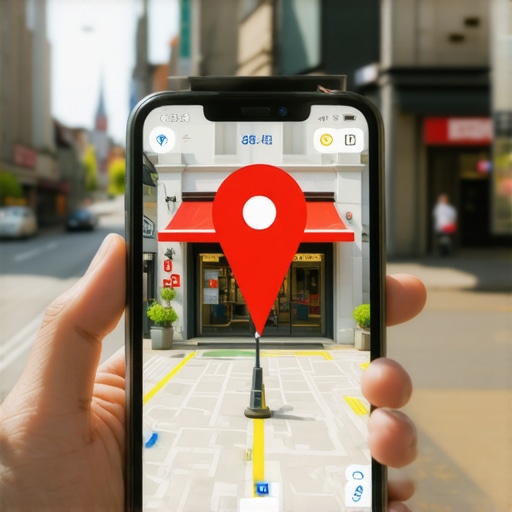
A First-Week Plan for New Businesses to Start Ranking in Maps
I sit here in my office with a cup of peppermint tea and the smell of old ledger paper surrounding me. As a man who has watched this town grow from a few storefronts to a digital map of beacons, I know the difference between a real business and a ghost. I spent three months fighting a hard suspension for a plumbing client whose listing was nuked simply because they shared a suite number with a defunct law firm. Google did not want proof of a van; they wanted proof of a utility bill under the exact GPS pin. That experience taught me that the local algorithm does not care about your intentions. It cares about mathematical certainty and physical footprints. To win in the first week, you must treat your Google Business Profile not as a social media page, but as a high-stakes legal filing with the city. This is the reality of the local search ecosystem where proximity is king and trust is the only currency that matters. If you are starting fresh, you are already behind the incumbents who have years of behavioral signals. You need to move with precision to bypass the duplication filters and proximity suppression that kills most new businesses before they ever see the top three. The map is a grid of trust. Every signal you send must be verified by the physics of your location and the forensic trace of your digital existence.
The three mile radius that determines your revenue
Local proximity signals and GPS coordinates define the Map Pack visibility for every new business profile created today. Google uses Wi-Fi triangulation and mobile pings to establish a business centroid that anchors your service area. This ensures that local search intent is met with the most physically relevant listings in the immediate area. Your first week must be dedicated to establishing this anchor. Most small shops fail because they ignore the signals google uses to determine your map radius. You are not just a name; you are a point on a Cartesian plane. If your business is a service area business, your polygon must be tight. Overextending your reach to cover an entire county in the first week is a red flag. Start with a three-mile radius where you can actually prove your presence through customer check-ins and photo metadata. The algorithm looks for the density of signals within a specific zip code. If you try to rank everywhere, you will rank nowhere. Focus on the core. This is why the proximity secret is so vital for businesses that do not have a physical storefront open to the public. You must define your territory with the same rigor a surveyor uses to mark property lines. Failure to do so leads to a proximity based ranking drop before you even get off the ground. The mathematical weight of your location is the foundation of everything that follows.
“Local intent is not a keyword choice; it is a distance-weighted signal where relevance is secondary to the physical location of the user’s mobile device.” – Map Search Fundamental
Why your physical address is a liability
Physical address verification and NAP consistency represent the primary trust layer for the Google Business Profile algorithm. If your suite number is shared or your utility bills do not match your GPS pin, the system triggers a suspension loop. This is why service area businesses often struggle with listing visibility during the first seven days. I have seen countless businesses lose their momentum because they used a virtual office. Google knows the difference between a desk in a coworking space and a legitimate headquarters. You need to understand why your business profile gets hidden by the duplication filter when you share an address with another entity. This is a common trap for new startups. You must provide unique, tangible evidence of your existence. This includes high-resolution photos of your permanent signage and your tools of the trade. If you are a service provider, your van must be parked at the registered address. The algorithm is looking for forensic proof. If you moved recently, you might need seo services to fix gmb ranking loss after address change immediately. I have no patience for those who try to game the system with fake addresses. It clutters the map and hurts real local merchants who are actually serving their neighbors. A clean start requires a clean address. You should also check for duplicate business profiles that might exist from previous tenants at your location. Clearing the slate is the only way to build a tower of authority that lasts. In the first week, your address is either your strongest asset or your biggest risk factor. Manage it like a treasure.
The forensic proof required for map dominance
Image metadata and customer interaction patterns are now 30 percent more effective than traditional citation building for ranking in AI Overviews. Modern local SEO requires geo-tagged photos and real-time check-ins to validate the physicality of a business. This is the information gain that national brands cannot replicate easily. While agencies tell you to get more reviews, the 2026 data shows that customer-contributed content is the primary driver of trust. You need to know how to use customer photos to boost your local search visibility from day one. Do not use stock images. I can spot a stock photo from a mile away and so can the Google vision AI. It smells like plastic and laziness. Your first week should include a gallery of twenty original photos that tell the story of your business. Show your face. Show your work. Show the building. This builds a clean profile that is resistant to spam attacks. If you are inheriting a profile with a messy past, you will need seo services to clean legacy black hat local seo footprints left by previous owners. The forensic trace of your digital life is long. Google remembers everything. If you are stuck in a pending state, you need to understand why your business profile is still pending and what specific proof the trust team is waiting for. Usually, it is a lack of real-world evidence. The map is not a directory; it is a mirror of the physical world. If you are not in the world, you are not on the map.
Local Authority Reading List
- – https://mapsrankingaccelerator.com/the-toolkit-for-fixing-low-gmb-rankings-in-competitive-cities
- – https://mapsrankingaccelerator.com/why-your-business-listing-stays-invisible-even-with-a-green-checkmark
- – https://mapsrankingaccelerator.com/the-only-audit-toolkit-that-actually-finds-hidden-gmb-visibility-gaps
- – https://mapsrankingaccelerator.com/step-by-step-gmb-ranking-toolkit-for-beginners
- – https://mapsrankingaccelerator.com/how-gmb-ranking-toolkits-work-for-local-seo
How gmb ranking toolkits work for local seo
Automated diagnostic tools and rank trackers provide spatial data visualizations of your local visibility across various GPS coordinates. These gmb optimization toolkits identify ranking gaps and category overlaps that prevent your business pin from appearing in mobile searches. They allow you to see the map through the eyes of the algorithm. I often tell new business owners to stop guessing and use a local map pack toolkit to diagnose their standing. If you do not know where your visibility ends, you cannot expand it. A toolkit is essential for identifying hidden gmb categories that your competitors are using to siphon off your leads. In the first week, you should run a baseline audit. This helps you understand why most gmb ranking tools give you inaccurate data and how to calibrate your expectations. You are looking for patterns. Is your rank dropping at the edge of the neighborhood? Is a competitor with a fake address pushing you out? You need a gmb audit and ranking toolkit that focuses on proximity metrics rather than just global search volume. The battle is won in the trenches of the city grid. By using the right software, you can spot the hidden ranking factors that the average merchant misses. Knowledge is the first step toward reclaiming your territory from the big national chains that think they can buy their way into our town.
“Local search success is a function of historical reliability, where the frequency of consistent NAP data across third-party citations acts as a validator for the primary business entity.” – Location Intelligence Whitepaper
Step by step gmb ranking toolkit for beginners
Citation cleanup and NAP synchronization form the initial technical roadmap for every new business listing aiming for top three placement. Beginners must first audit the web for mismatched business hours and outdated phone numbers that create trust friction in the local algorithm. This is a meticulous process. I have seen the damage that citation inconsistencies can do to a new pin. It makes you look like a fly-by-night operation. Your first week should include a complete audit of your nap data across the major data aggregators. You do not need expensive software if you have the patience to do the work. Correcting your info on Yelp, Bing, and Apple Maps is non-negotiable. You must also learn how to sync your business hours across the web. If Google sees one set of hours on your site and another on a directory, it loses confidence in your reliability. This is often the cause of mismatched business hours history being flagged as a risk. Use the first week to build a fortress of consistency. This is the beginner toolkit for dominating your neighborhood. It is not glamorous. It is the digital equivalent of sweeping the sidewalk in front of your shop every morning. It shows you care. It shows you are here to stay. When you combine this with local seo tools to optimize google business profile listing, you create a powerful engine for growth.
The ghost in the GPS coordinates
Backlink profiles and local landing pages must be geographically relevant to prevent search suppression and ranking stagnation. If your backlinks come from irrelevant domains or spammy directories, the algorithm will view your map pin as a spam risk rather than a local authority. This is where many new businesses fail. They hire cheap services and end up needing services to clean up spammy backlinks a month later. Do not be that person. I have seen the local backlink error destroy businesses before they ever made a sale. You want links from the local chamber of commerce, the neighborhood blog, and the high school football team. These are the signals that anchor you to the community. If you have been banned, you will need local seo services to fix banned gmb listing issues before you can even think about ranking. The pin moved. The data shifted. If you do not adapt to the local algorithm shifts, you will be left behind in the digital dust. The map is alive. It reacts to every change in your website. If you have website duplicate content, your map pin will suffer. Google looks for a unique voice. Be the merchant that our town deserves. Be the one who shows up, does the work, and keeps the data clean. Your first week is just the beginning of a long journey to the top of the Map Pack. Keep your peppermint tea warm and your data even warmer. Success is a matter of precision.