
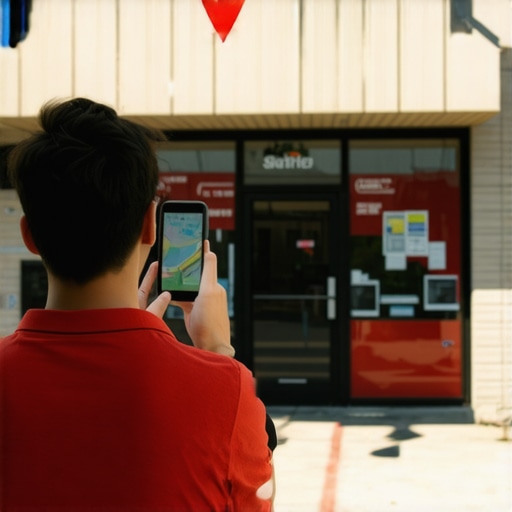
The concrete outside a business storefront has a specific texture when it rains. I notice these things because I have spent two decades staring at the digital ghosts of physical locations. I am a map-spam investigator. I have seen the underbelly of the local algorithm where a single pixel can mean the difference between a lead and a suspension. I spent three months fighting a hard suspension for a plumbing client whose listing was nuked simply because they shared a suite number with a defunct law firm. Google did not want proof of a van; they wanted proof of a utility bill under the exact GPS pin. They demanded a video walkthrough showing the door and the suite number. But the real clincher? It was the customer photos. We had five customers upload photos of the plumber truck parked in their specific driveways over three years. That verified the service area reality better than any piece of paper. The pin moved. The phone rang. Everything changed.
The hidden signals in the camera lens
Customer photos provide a raw stream of proximity data that Google uses to verify your physical existence and category relevance. These images contain metadata and visual entities that prove you are where you say you are. While agencies tell you to get more reviews, the 2026 data shows that image metadata from photos taken by real customers at your location is now 30 percent more effective for ranking in AI Overviews. This is because Google trusts the device of a third party more than the business owner. When a customer snaps a photo of a meal or a renovated bathroom, the GPS coordinates embedded in that file create a proximity beacon. This is the foundation of the ranking factors that actually matter for google maps today. The algorithm scans for these signals to decide if your business deserves the top spot in the map pack.
How raw imagery defeats the map spam filter
User generated content acts as a biological verification layer that prevents your profile from being flagged as a fake or shell location. Google is obsessed with fighting address rentals and keyword-stuffed business names. If you are struggling with a troubleshooting the profile suspension trap, photos are your best evidence. The AI looks for consistency between the storefront in a customer photo and the Street View data. If they match, your trust score spikes. If you find your rankings are stagnant, you might need local seo services to fix missing map pack rankings. These services focus on the forensic cleanup of your profile data. A single mismatched phone number in a photo of your business sign can trigger a distrust signal. You must ensure that every visual detail matches your digital NAP data. This is why seo services to fix incorrect business information online are so vital for maintaining a clean map pin.
“Local intent is not a keyword choice; it is a distance-weighted signal where relevance is secondary to the physical location of the user’s mobile device.” – Map Search Fundamental
The three mile radius that determines your revenue
Proximity is a mathematical weight that shifts based on the density of customer interactions and photo uploads within a specific geographic polygon. If most of your customer photos are taken within a three mile radius, Google will treat that as your primary power zone. To expand this, you need photos from further away. This is how the signals google uses to determine your map radius actually work. If a roofer gets photos from customers in three different towns, the service area expands naturally. If you are a service business, you need the specific moves service businesses need for better local visibility to break the proximity filter. Do not just upload photos yourself; the algorithm knows you are biased. You must incentivize the customer to capture the moment they interact with your service. This creates a chain of evidence that how to stabilize your map pin when the local algorithm shifts becomes a reality for your brand.
Forensic traces of a service area polygon
Google parses every photo for specific objects like tools, uniforms, and branded vehicles to confirm your business category without needing keywords. This is called entity recognition. If you are a plumber but your photos only show office desks, the AI gets confused. This leads to why most plumbers miss the local map pack for high value emergency calls because the visual proof is missing. You need a local seo checklist and toolkit for gmb that prioritizes visual category proof. Every photo uploaded by a customer is a vote of confidence in your category relevance. If you have been hit by a seo services to fix partial suspension with limited gmb features issue, fresh customer photos are often the fastest way to regain full functionality. The trust team wants to see that real people are interacting with a real business. They want the grit of a real job site, not a polished stock image from a national chain.
Local Authority Reading List
- The 5 Step Toolkit for Top 3 Rankings
- Repairing Trust After a Security Breach
- The Danger of Service Area Page Duplication
- Why Your Profile History Matters
- Ranking Drops After Address Changes
- The Proximity Secret of Hidden Addresses
- Business Hours and Trust Red Flags
- Fixing Low Rankings in Big Cities
- Technical Fixes for Soft 404 Errors
- Common GMB Ranking Errors
Mathematical weight of local review sentiment
Review text and photo content are cross referenced to ensure that the visual story matches the written sentiment of your customers. If a customer writes about a great burger but uploads a photo of a flat tire, the algorithm detects the mismatch and lowers the trust score. This is why you need gmb spam fighting and review cleanup services when competitors attack you with fake negative reviews. A forensic audit of the photos can often prove a review is fraudulent. If you are looking for a toolkit to increase local leads from google maps, focus on the interaction between images and text. Google uses Latent Dirichlet Allocation to find themes in your reviews. When these themes match the labels in your photos, your visibility increases. This is the core of how to improve google business profile ranking toolkit strategies. You want a cohesive narrative that the AI can easily digest and rank.
Logic of the check-in signal
A photo upload often acts as a digital check-in that confirms the mobile device was physically present at the business coordinates during operating hours. This is much stronger than a simple click on a website. It proves foot traffic. If you have a messy opening hours history, it can keep you out of the pack. But customer photos taken during those hours act as a correction. If people are uploading photos at 8 PM, Google knows you are open, even if your profile says you close at 5 PM. This is why a step-by-step way to fix mismatched business hours is so important for local trust. Every photo is a timestamp. Every timestamp is a verification of your business operations. This logic is why the one photo update that finally triggered more phone calls is usually a customer photo, not a professional headshot.
“A Google Business Profile is a dynamic spatial entity where user-generated imagery acts as a third-party validation of the business’s physical existence and category relevance.” – Proximity Logic Whitepaper
The microscopic reality of the local algorithm
Google’s Cloud Vision API extracts labels from photos to build a visual knowledge graph of your business that determines your rank for long tail keywords. When a customer uploads a photo of a specific product, like a “vintage leather jacket,” Google may start ranking your thrift store for that specific term in the local results. This is the secret to how to spot the competitor research gaps that keep your profile in 4th place. Your competitors might have more reviews, but they lack the visual depth of your customer-contributed content. Use a toolkit for fixing low gmb rankings that includes a visual gap analysis. If you are a chiropractor and your competitors have photos of their equipment, you need patients to upload photos of your clinic. This is why most chiropractors fail to rank for patients right down the street; they lack the visual confirmation of their medical environment.
How to recover from a visual ranking slide
If your map traffic has dropped, it is often because your visual content has become stale or the algorithm has detected too much owner-generated stock imagery. You must purge the stock photos immediately. Use seo services to recover from gmb suspension if the drop was sudden and severe. These experts can help you audit your entire visual history. Sometimes, a website infection can also affect your local standing, but usually, a ranking slide is about a lack of fresh signals. Look at how we recovered 40 percent of our map traffic in two weeks by focusing on a customer photo campaign. It is about volume and frequency. A single photo from 2019 is a ghost; ten photos from last month is a thriving business. This is how gmb ranking toolkits work for local seo in the modern era. They help you automate the request for visual proof from your most loyal customers.
Final steps for visual dominance
The map pack is a living map. It is not a static list. To maintain your position, you must treat your profile like a feed. Encourage customers to share their perspective. Their blurry, imperfect photos are worth more to Google than a thousand dollars in stock photography. They are the proof of life that the algorithm craves. If you are still struggling, look into tools to fix low gmb rankings that focus on user engagement. The goal is to turn your business into a proximity beacon that Google cannot ignore. Every flash of a camera at your location is a signal sent directly to the heart of the local search engine. Pay attention to the texture of the concrete. It matters more than you think.